
How MANiBOT is a Step Toward Smarter Airports
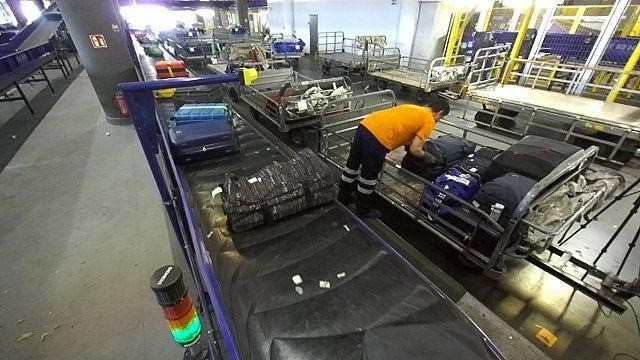
Baggage Handling is a core activity at all airports which directly affects customer experience for departing as well as arriving passengers. Efficient baggage handling is a vital contributing factor to smooth airport operations, as it safeguards timely departures of the aircraft with all luggage on board and swift return of all luggage to arriving passengers. As air travel continues to grow, airports are increasingly challenged to manage complex logistics while maintaining high standards of safety, on-time performance, and reliability. This is where MANiBOT steps in – with an innovative robotic solution designed to support the entire baggage loading and unloading process, while aligning with broader industry goals such as enhanced automation, improved working conditions, and increased passenger experience.
Increased Operational Efficiency
MANiBOT introduces automation to traditional manual baggage handling processes. By taking over repetitive and resource intensive tasks with precision and consistency, it reduces processing times, facilitates aircraft turnaround schedules, and improves overall operational efficiency at the airport. Through its enhanced system intelligence, MANiBOT induces smoother baggage flow and improved baggage routing, thus preventing congestions in the system and reducing delays in the overall process. The accelerated baggage processing contributes positively to aircraft on-time performance while also reducing operational delays. Furthermore, its integration into the airport’s baggage tracking infrastructure ensures that luggage is tracked through each stage of the process, minimizing misplaced and lost luggage.
Promoting worker well-being
Manual baggage handling exposes workers to physical strain, increasing the risk of injuries from heavy lifting and repetitive motions. MANiBOT reduces human involvement in these demanding tasks, promoting a healthier and more sustainable work environment, lowering injury-related absences, also helping to prevent workforce burnout. Over time, these improvements will contribute to higher employee morale, increased job satisfaction, and better retention rates, as workers benefit from safer working conditions and provides them with opportunities to focus on less strenuous, higher-value activities.
Improved passenger experience
Robotic systems offer consistent performance without fatigue, while maintaining reliable baggage handling operations. Automation minimizes errors, such as misrouted or mishandled luggage which in turn lead to lost or delayed baggage to the passenger. As MANiBOT supports optimized routing, it minimizes delays, mishandled and lost luggage which altogether lead to higher passenger satisfaction and fewer service complaints.
Addressing Staffing Challenges
Airports frequently face difficulties in finding and retaining personnel in manual processes and especially in baggage handling, particularly at airports with high seasonal traffic fluctuations. MANiBOT helps address such issues by reducing dependency on manual labor, providing a reliable and consistent alternative solution, especially during peak times or staff shortages.
Adaptable and scalable system
MANiBOT’s advanced sensory and gripping technologies enable it to handle a wide variety of baggage sizes and shapes. This adaptability ensures seamless operation across the diverse range of luggage typically handled in airports. Furthermore, its modular and scalable architecture allows it to be customizable to the specific needs of different airports, be it from large international hubs to smaller regional terminals. Its high level of operational reliability makes it a future-proof investment, capable of supporting airports’ evolving logistical requirements.
Long-Term Sustainability
By combining automation with enhanced occupational safety and operational efficiency, MANiBOT contributes to more sustainable airport logistics. The adaptability and scalability of MANiBOT allow airports to meet fluctuating passenger volumes without resorting to unsustainable surges in needed manual labor or infrastructure expansion. This flexibility ensures that logistics remain efficient and cost-effective while aligning with the broader goals of resilience and sustainability for the aviation industry.
Conclusion
The future of airport baggage handling lies in intelligent, human-centric automation. MANiBOT revolutionizes baggage handling by introducing a reliable, adaptable, and scalable robotic solution that addresses today’s logistical challenges while setting the stage for tomorrow’s smart airports. By integrating robotic intelligence into ground operations, MANiBOT enhances efficiency, protects occupational health and safety standards, and ensures consistent performance, helping airports to transition into a more sustainable, safe, and future-proof baggage management system.
Margarita Kontolatou, Aggeliki Gkalimaridou, Michel Stamoulis and Veronika Onasoglou, Fraport Greece